Abstract
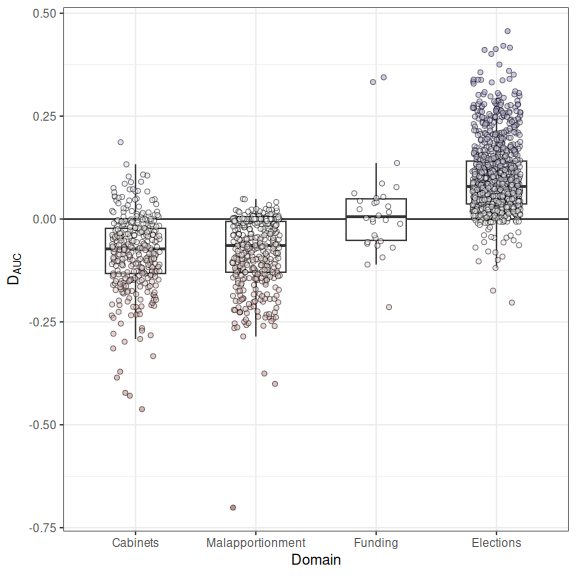
Many fields in political science deal with disproportionality between the share of outcomes each actor receives and their share of inputs. In some fields disproportionality is mostly regressive (big-get-bigger disproportionality), but in other disproportionality is degressive (the small are overcompensated). Unfortunately, existing measures of disproportionality collapse these two type of disproportionality, with negative consequences for theory development. We develop a new signed measure of disproportionality which shows whether big or small actors benefit from disproportionality. We show that around four percent of elections show degressive disproportionality, and that using our measure allows us to make better progress in connecting disproportionality to quantities we think we understand, like the seat and vote share of the largest party.
Full-text
The version of record is hosted by the journal, but you can read the version that was accepted with no paywall.
Replication data
Available at Harvard Dataverse